Genetic Basis of Human Disease
(selected publications)
2021
.png) (opens in new tab)
(opens in new tab)Simeonov et al. Single-cell lineage tracing of metastatic cancer reveals selection of hybrid EMT states.
Cancer Cell (2021)
PMID: 34115987 (opens in new tab) | PDF (opens in new tab)
(with Lengner and McKenna Labs)
2019
 (opens in new tab)
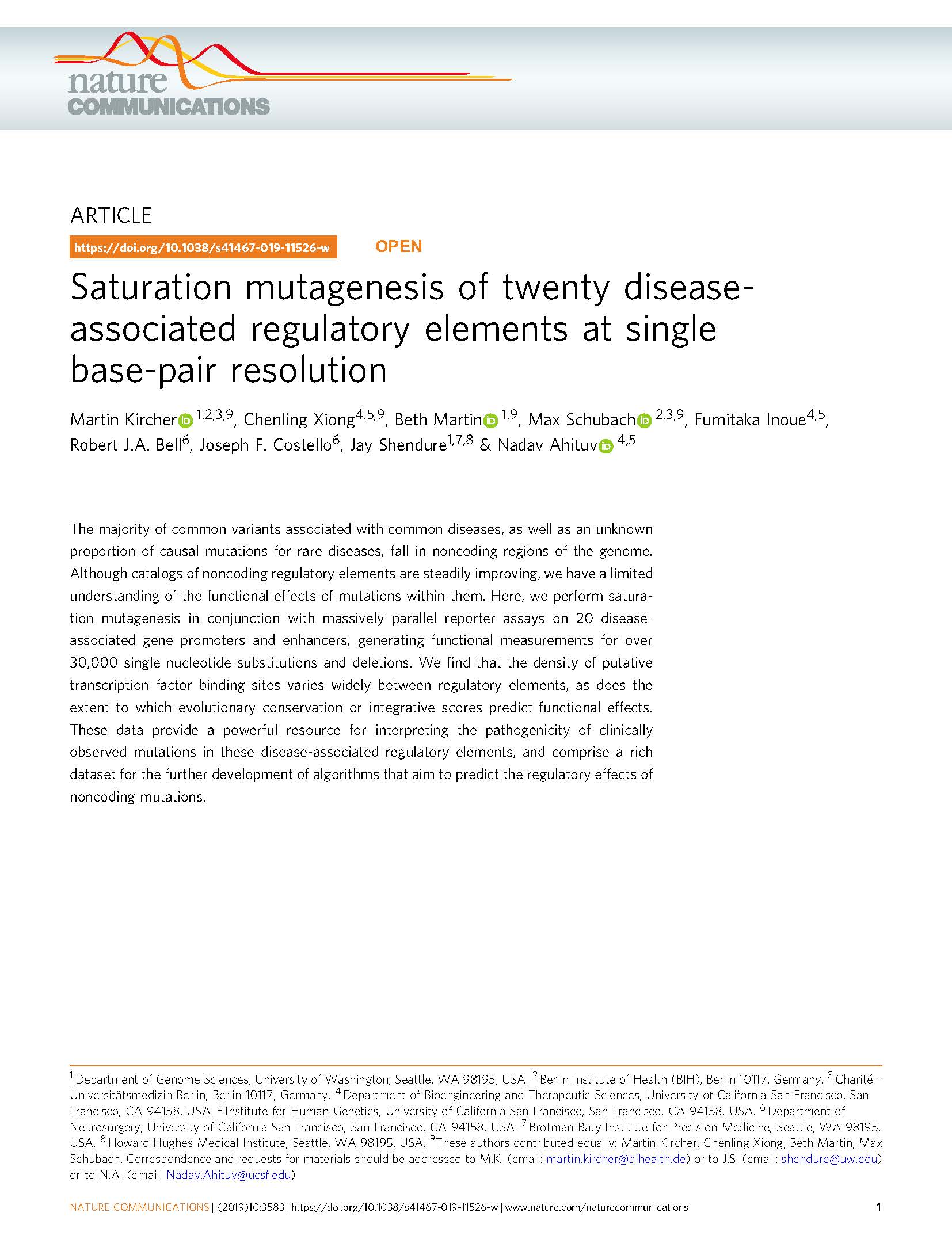
Kircher, Xiong, Martin, Schubach et al. Saturation mutagenesis of twenty disease-associated regulatory elements at single base-pair resolution.
Nature Communications (2019)
PMID: 31395865 (opens in new tab) | PDF (opens in new tab)
(with Ahituv and Kircher Labs)
 (opens in new tab)
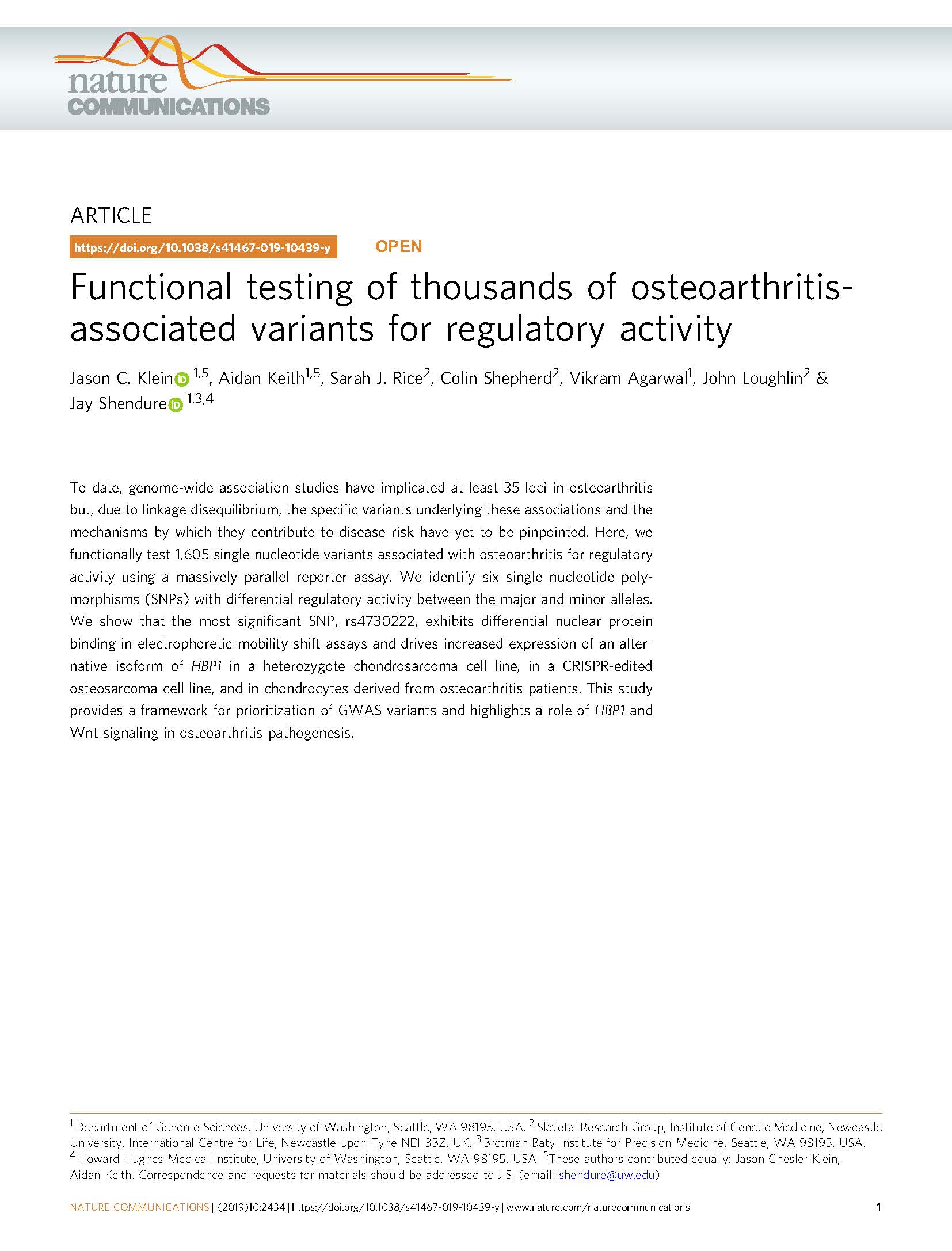
Klein et al. Functional testing of thousands of osteoarthritis-associated variants for regulatory activity.
Nature Communications (2019)
 (opens in new tab)
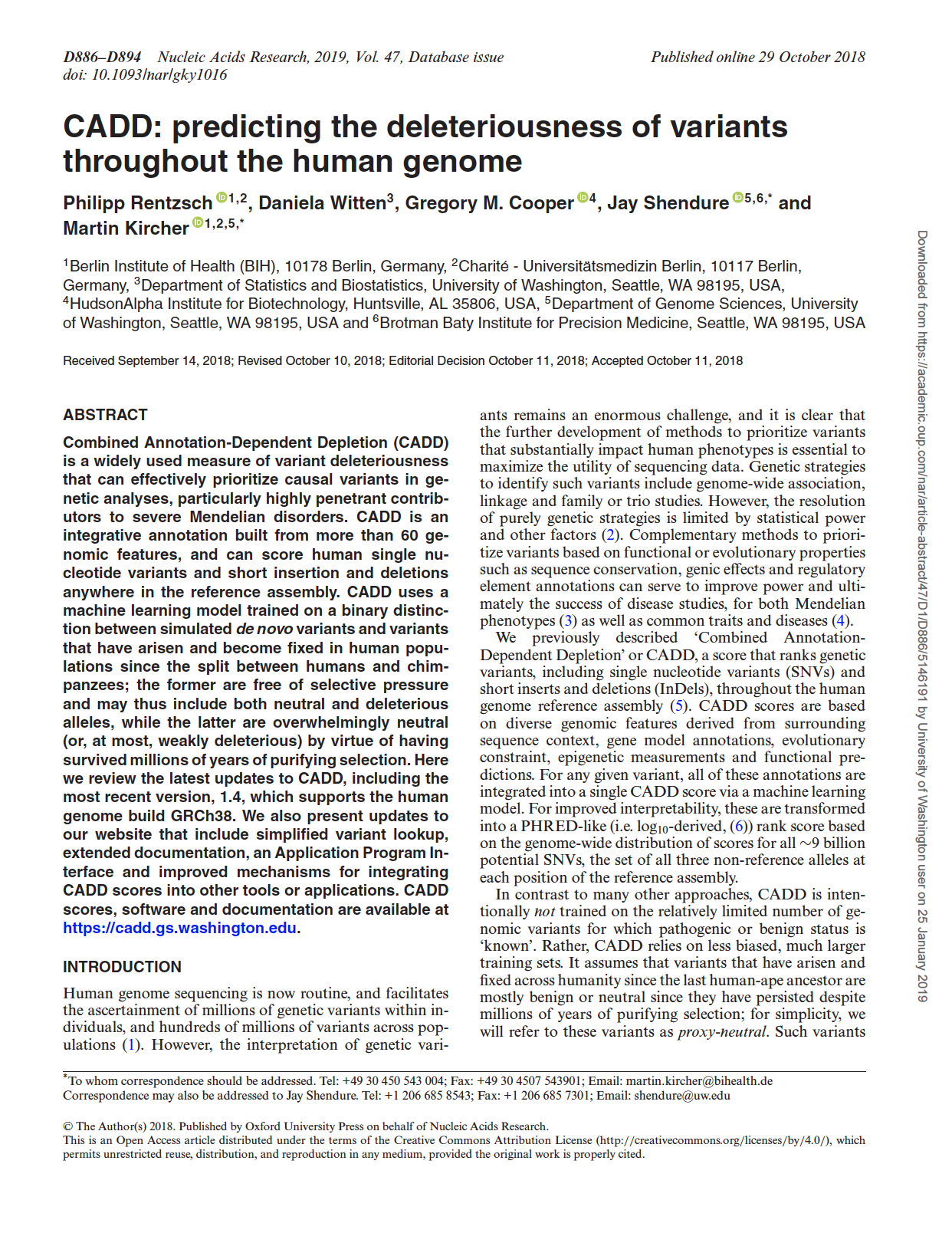
Rentzsch et al. CADD: predicting the deleteriousness of variants throughout the human genome.
Nucleic Acids Research (2019)
PMID: 30371827 (opens in new tab) | PDF (opens in new tab)
(with Kircher Lab)
2018
 (opens in new tab)
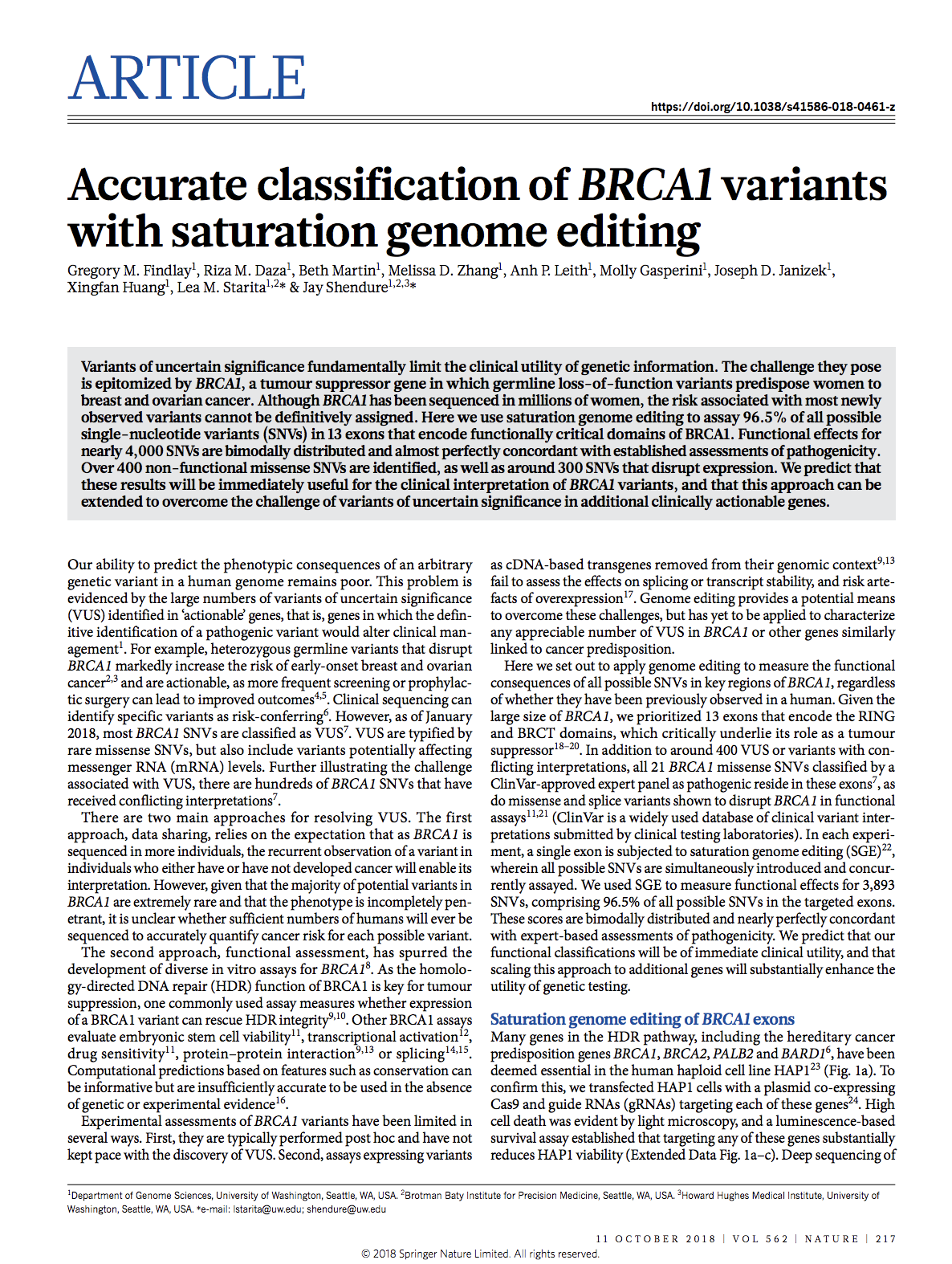
Findlay et al. Accurate classification of BRCA1 variants with saturation genome editing.
Nature (2018)
PMID: 30209399 (opens in new tab) | PDF (opens in new tab)
(with Starita Lab)
 (opens in new tab)
Starita et al. A Multiplex Homology-Directed DNA Repair Assay Reveals the Impact of More Than 1,000 BRCA1 Missense Substitution Variants on Protein Function.
AJHG (2018)
PMID: 30219179 (opens in new tab) | PDF (opens in new tab)
(with Parvin Lab)
 (opens in new tab)
Cusanovich, Hill et al. A Single-Cell Atlas of In Vivo Mammalian Chromatin Accessibility.
Cell (2018)
PMID: 30078704 (opens in new tab) | PDF (opens in new tab)
(with Trapnell Lab)
2017
 (opens in new tab)
Gasperini, Findlay et al. CRISPR/Cas9-Mediated Scanning for Regulatory Elements Required for HPRT1 Expression via Thousands of Large, Programmed Genomic Deletions.
AJHG (2017)
2016
 (opens in new tab)
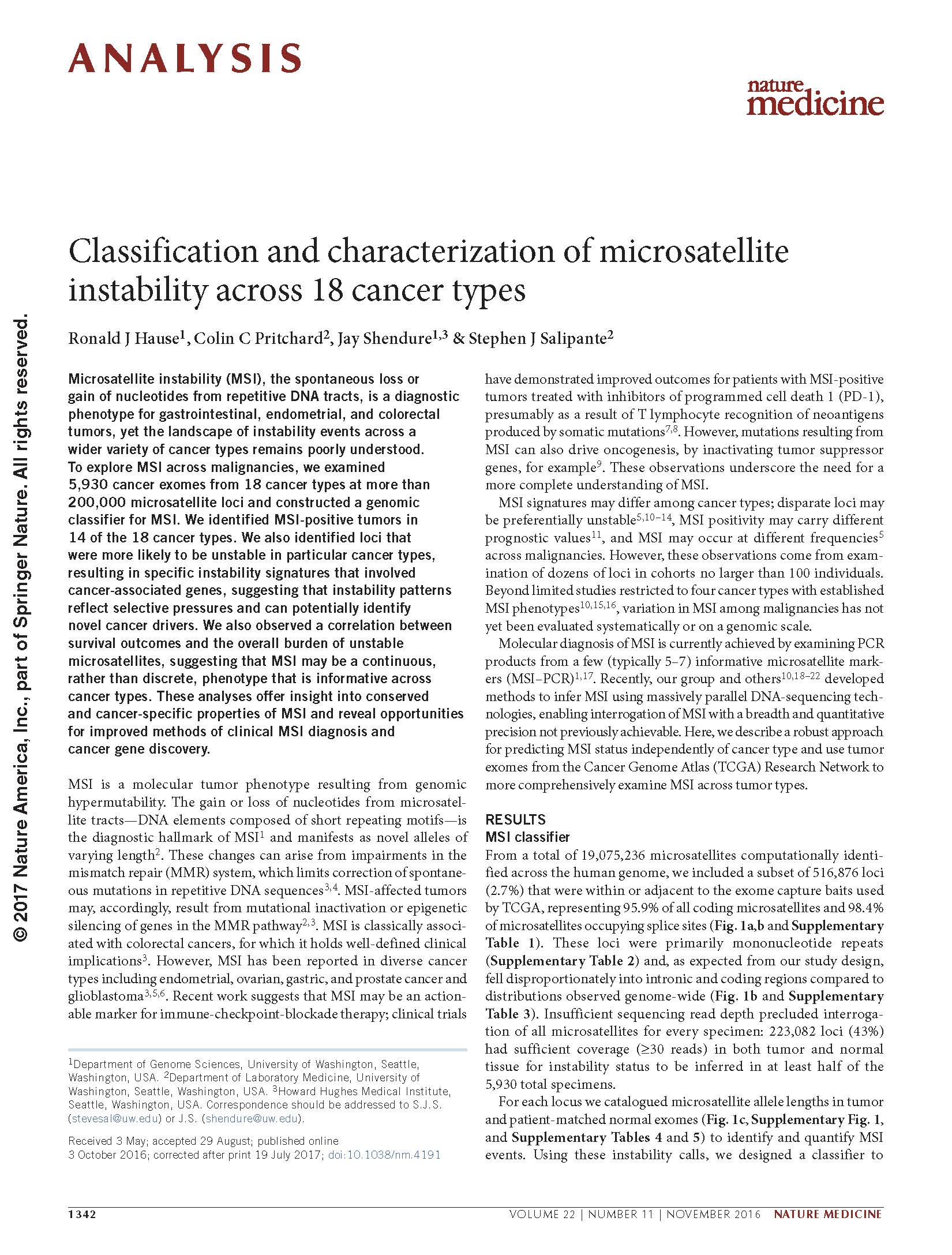
Hause et al. Classification and characterization of microsatellite instability across 18 cancer types.
Nature Medicine (2016)
PMID: 27694933 (opens in new tab) | PDF (opens in new tab)
(with Salipante Lab)
 (opens in new tab)
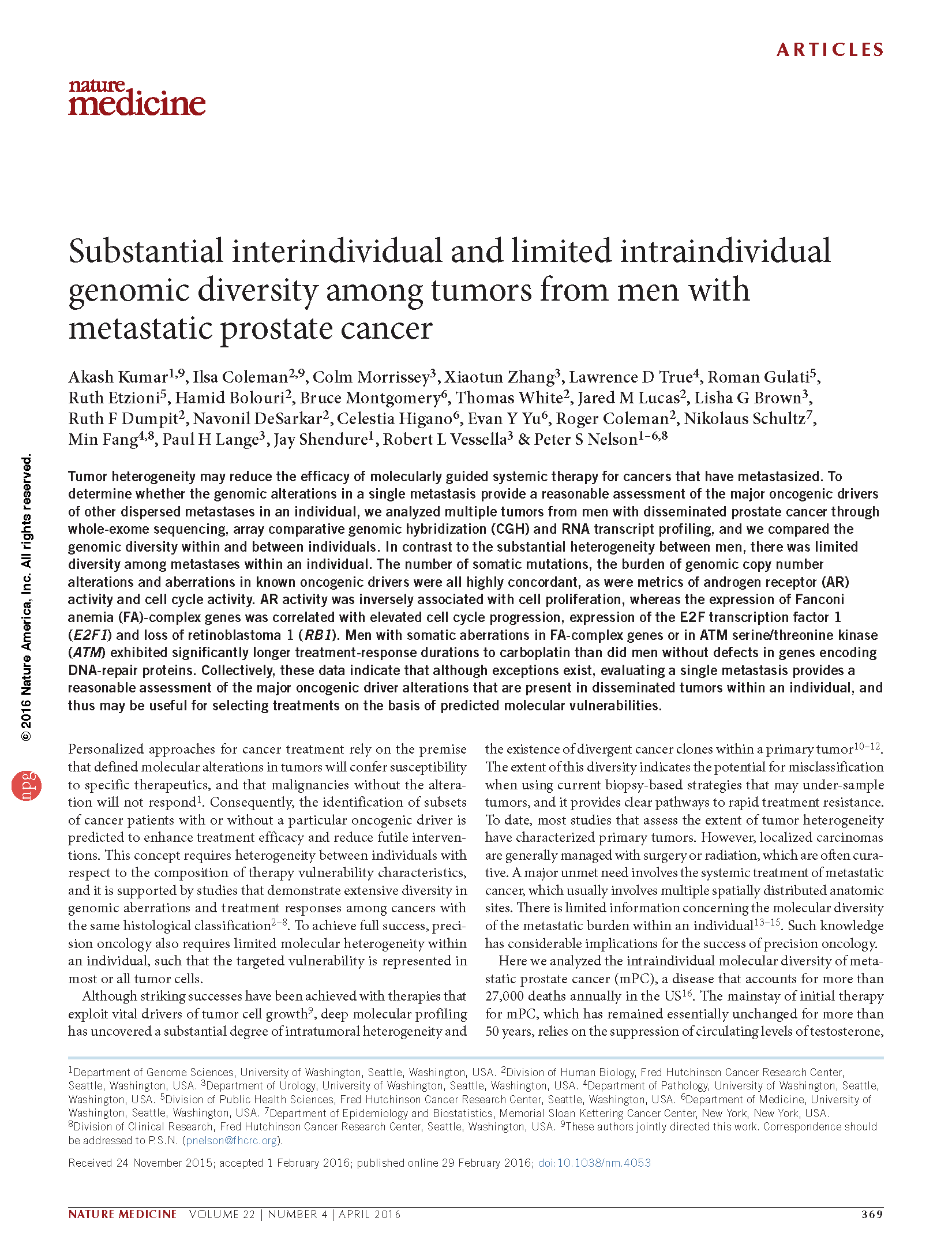
Kumar, Coleman et al. Substantial interindividual and limited intraindividual genomic diversity among tumors from men with metastatic prostate cancer.
Nature Medicine (2016)
PMID: 26928463 (opens in new tab) | PDF (opens in new tab)
(with Nelson Lab)
2015
 (opens in new tab)
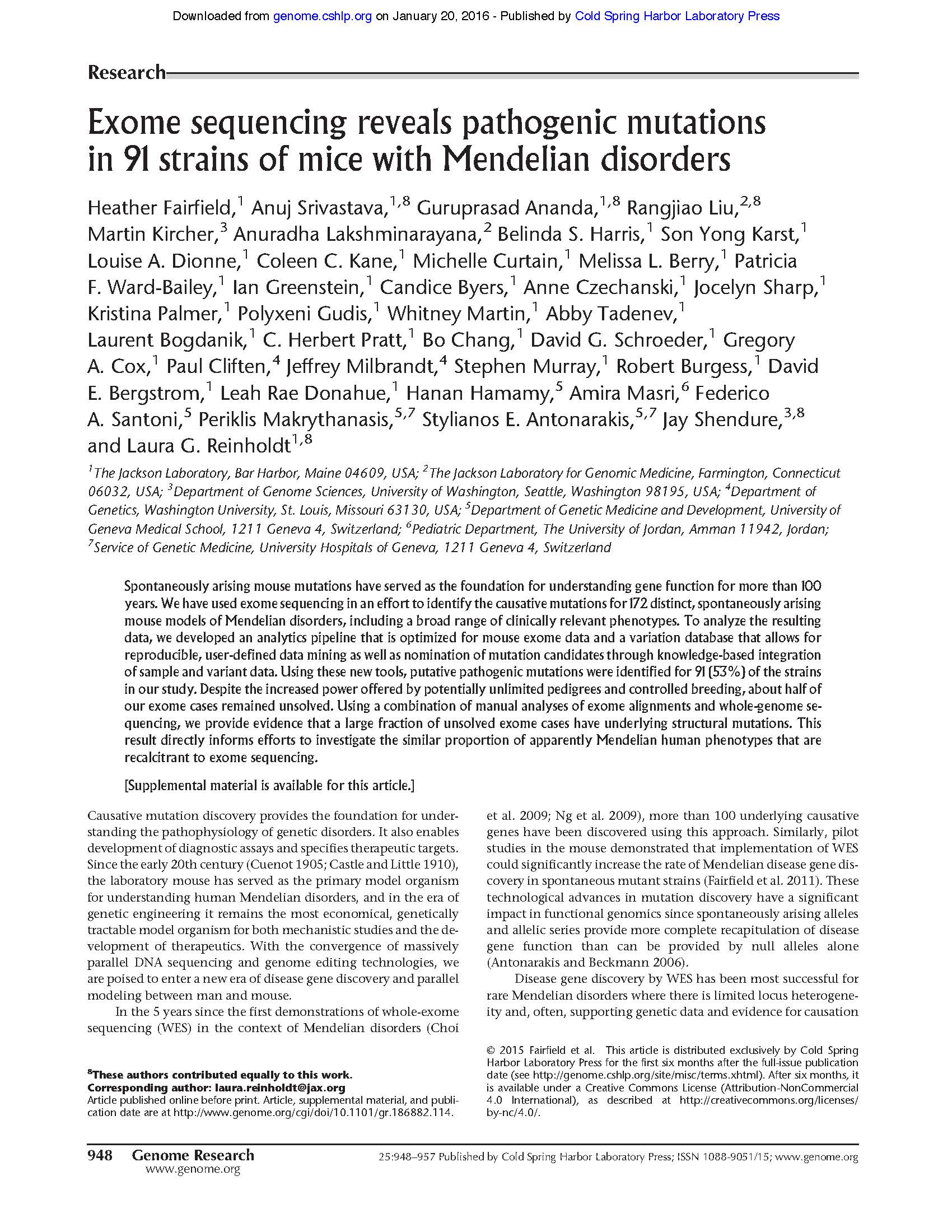
Fairfield, Srivatsava, Ananda, Liu et al. Exome sequencing reveals pathogenic mutations in 91 strains of mice with Mendelian disorders.
Genome Research (2015)
PMID: 25917818 (opens in new tab) | PDF (opens in new tab)
(with Reinholdt Lab)
 (opens in new tab)
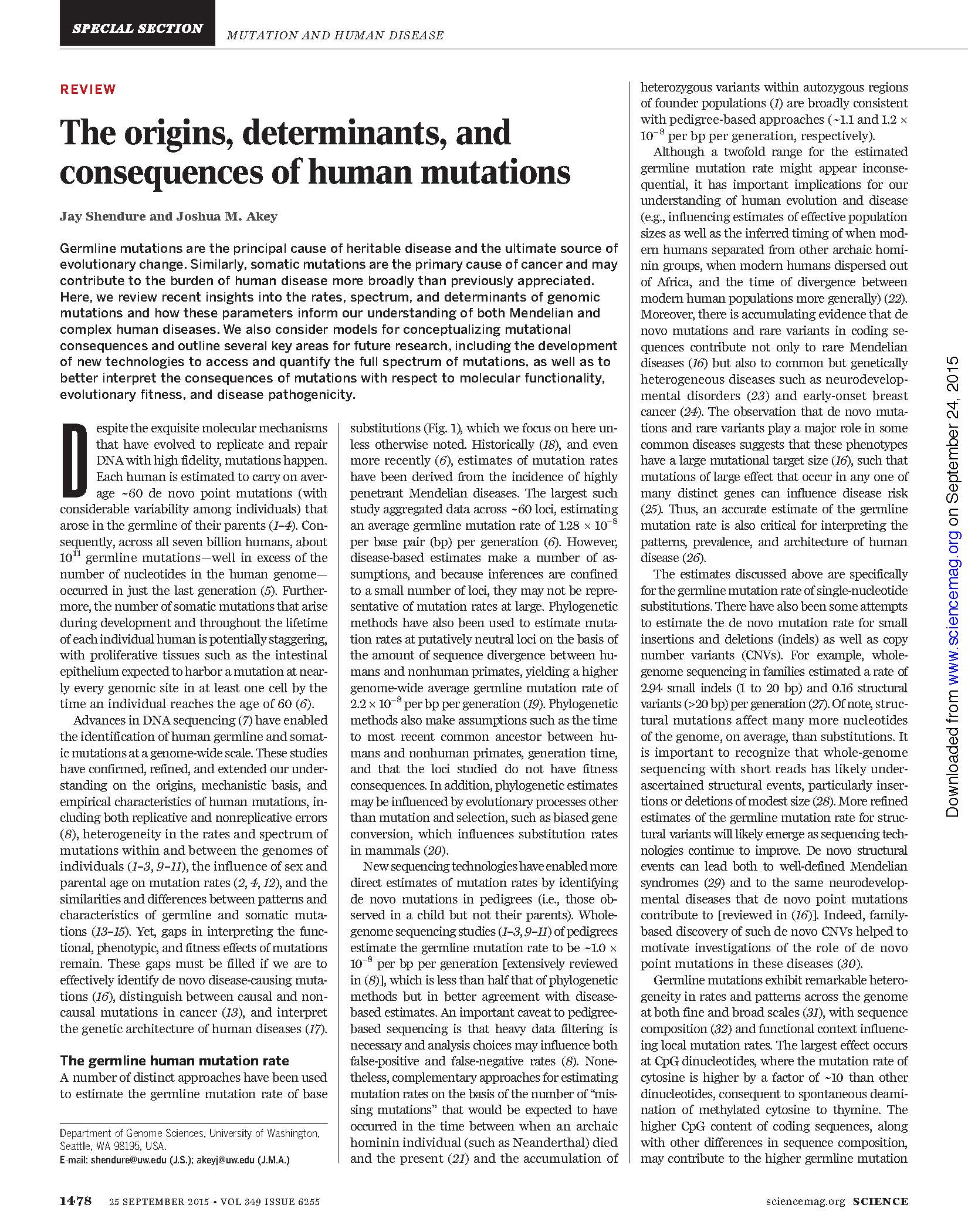
Shendure, Akey. The origins, determinants, and consequences of human mutations.
Science (2015)
2014
 (opens in new tab)
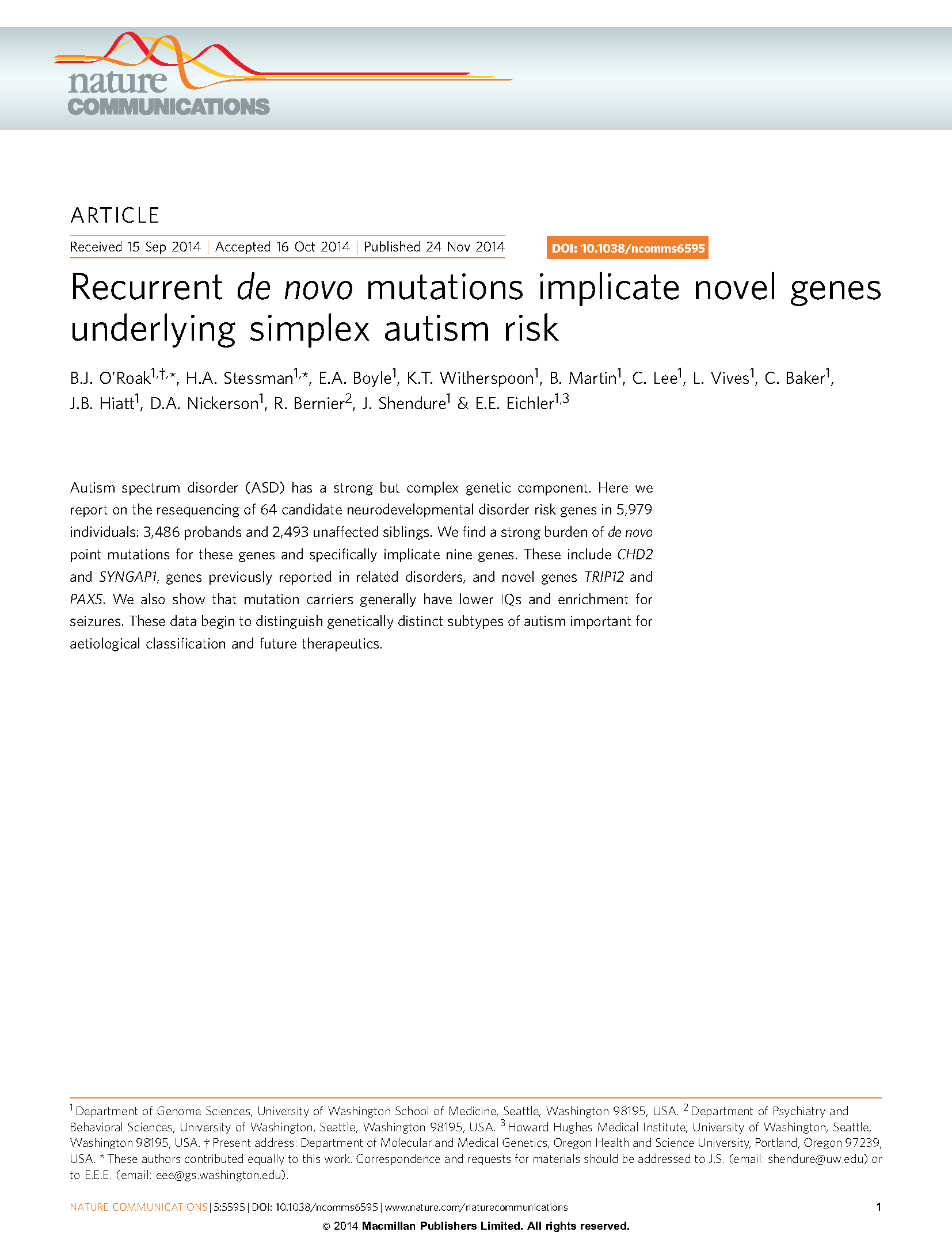
O'Roak, Stessman et al. Recurrent de novo mutations implicate novel genes underlying simplex autism risk.
Nature Communications (2014)
PMID: 25418537 (opens in new tab) | PDF (opens in new tab)
(with Eichler Lab)
 (opens in new tab)
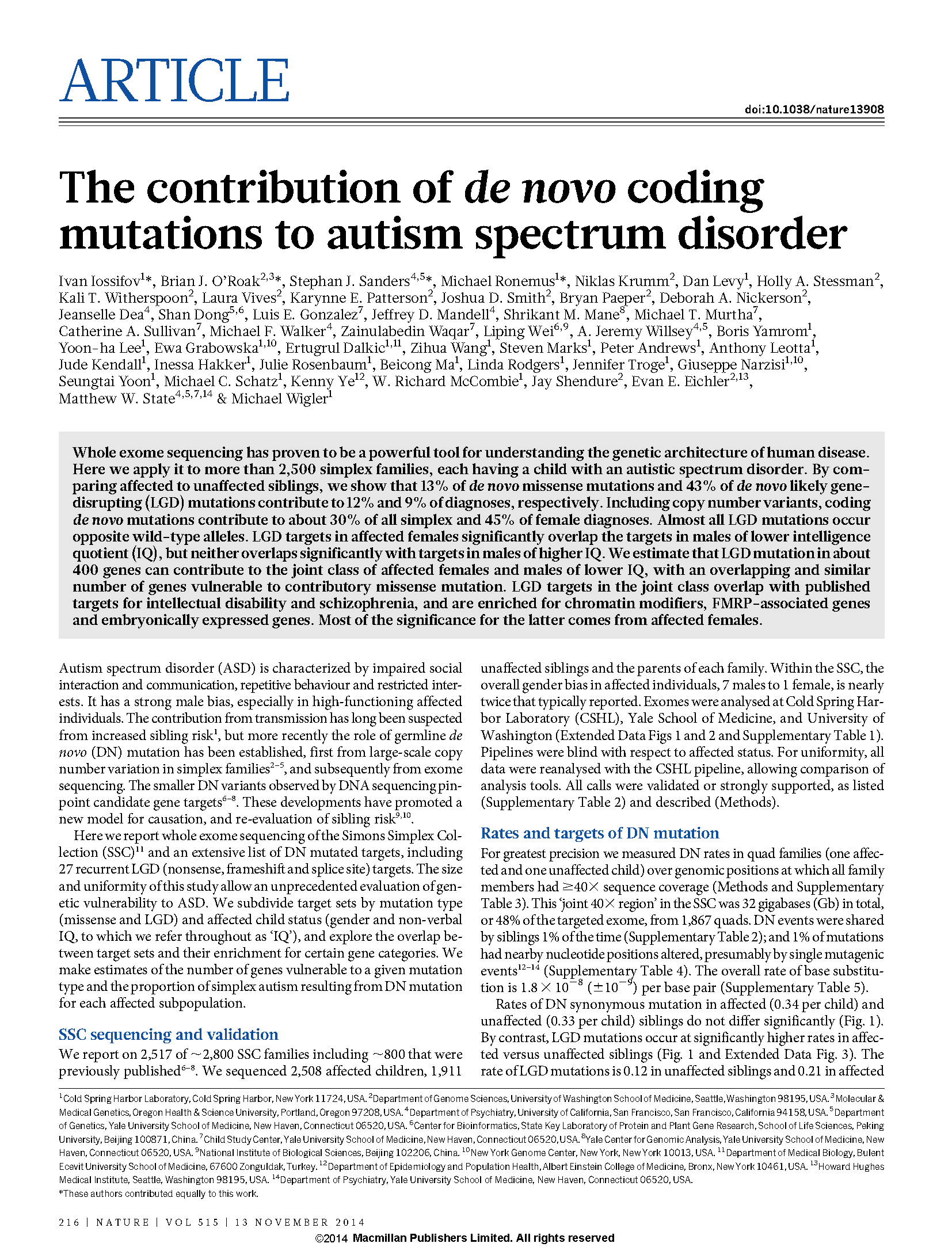
Iossifov, O'Roak, Sanders, Ronemus et al. The contribution of de novo coding mutations to autism spectrum disorder.
Nature (2014)
PMID: 25363768 (opens in new tab) | PDF (opens in new tab)
(with Wigler, State and Eichler Labs)
 (opens in new tab)
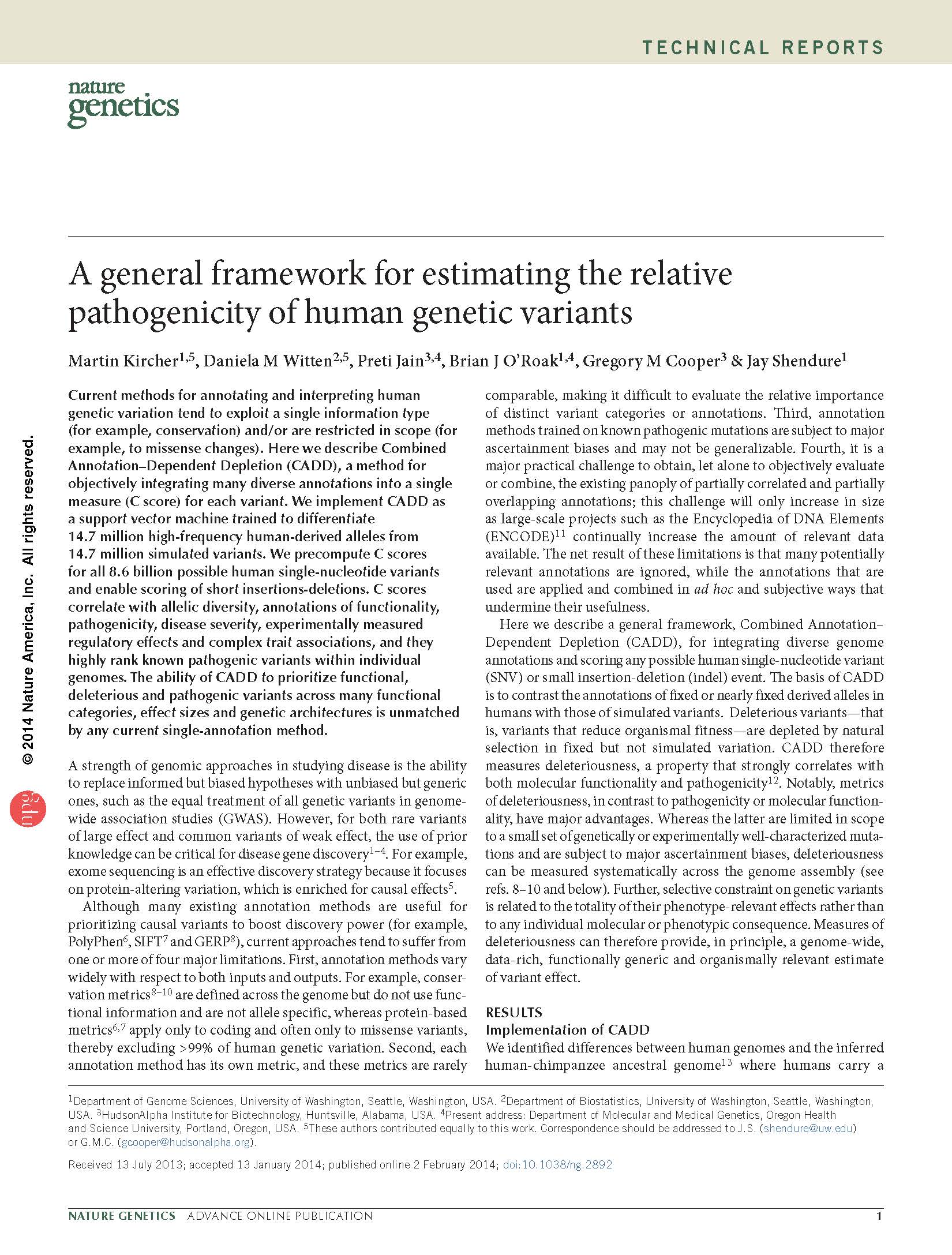
Kircher, Witten et al. A general framework for estimating the relative pathogenicity of human genetic variants.
Nature Genetics (2014)
PMID: 24487276 (opens in new tab) | PDF (opens in new tab)
(with Cooper Lab)
 (opens in new tab)
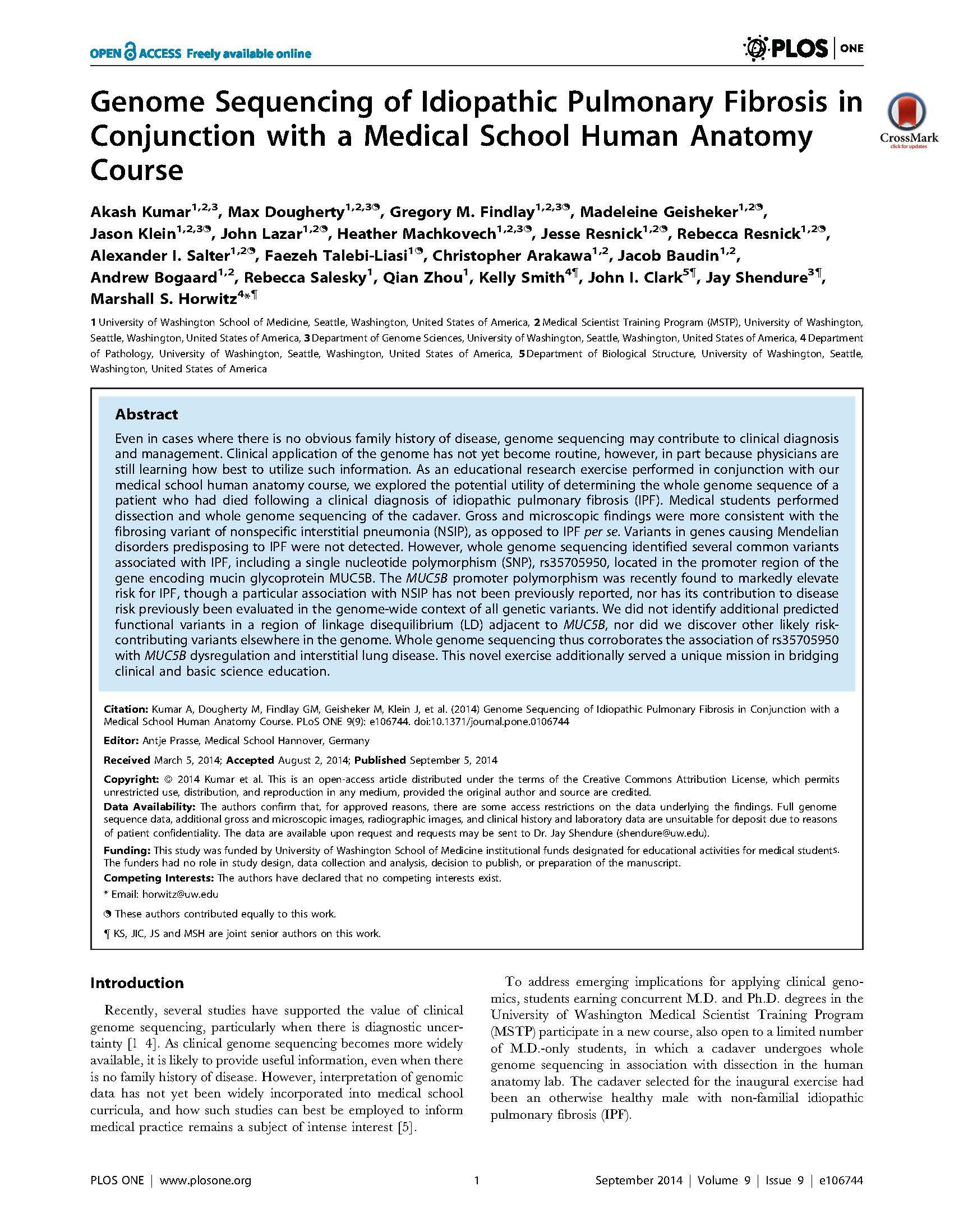
Kumar et al. Genome sequencing of idiopathic pulmonary fibrosis in conjunction with a medical school human anatomy course.
PLoS One (2014)
2012
 (opens in new tab)
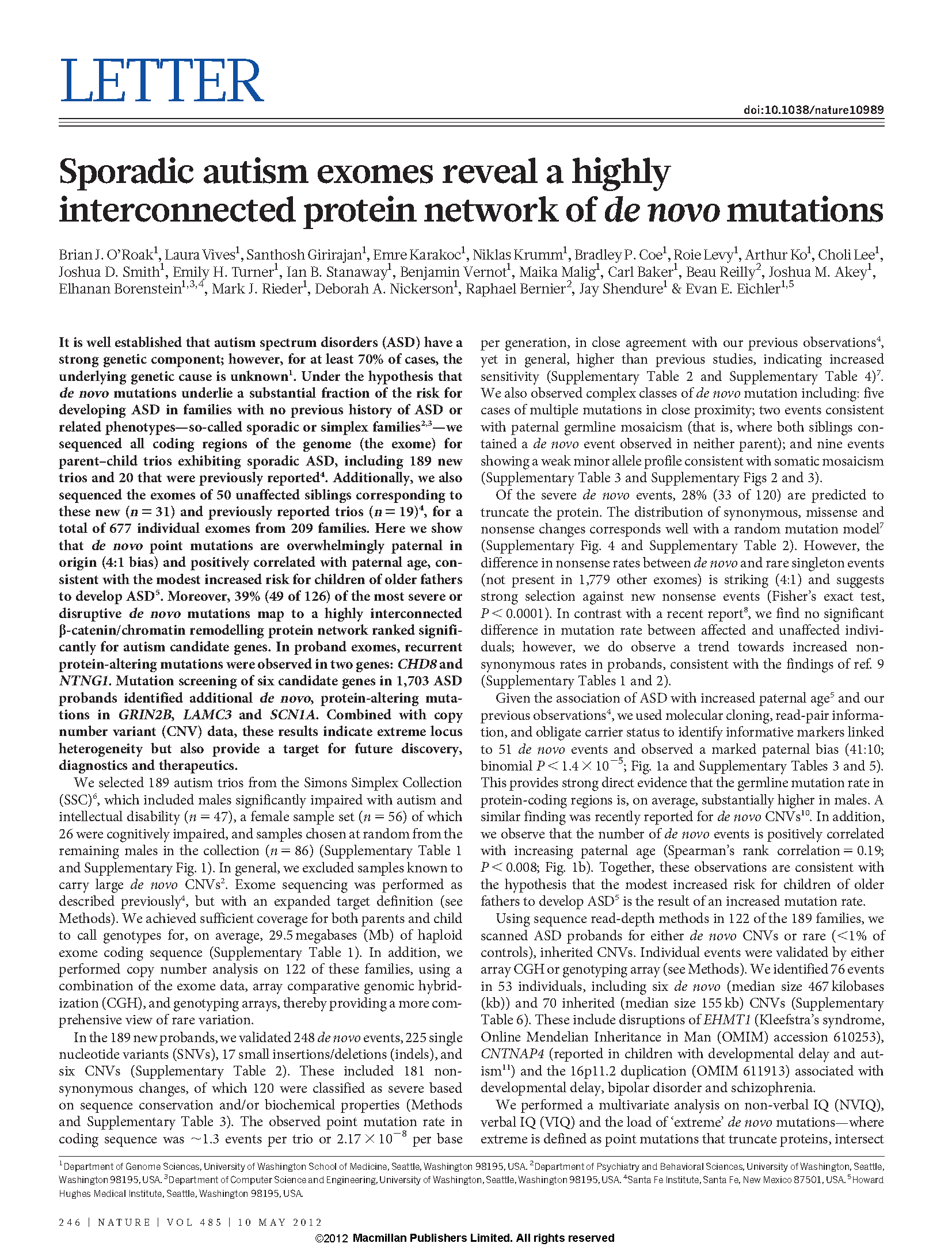
O'Roak et al. Sporadic autism exomes reveal a highly interconnected protein network of de novo mutations.
Nature (2012)
PMID: 22495309 (opens in new tab) | PDF (opens in new tab)
(with Eichler Lab)
 (opens in new tab)
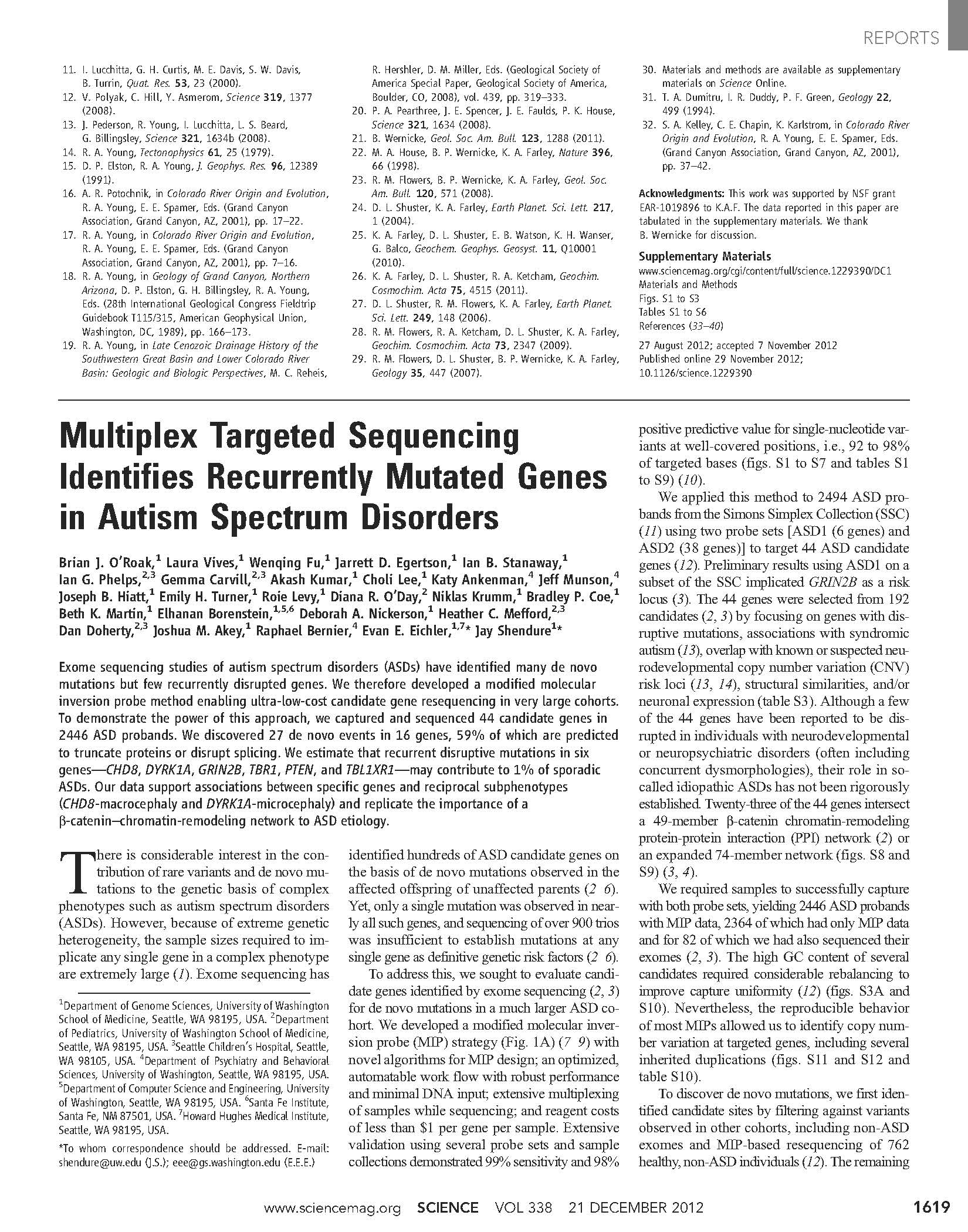
O'Roak et al. Multiplex Targeted Sequencing Identifies Recurrently Mutated Genes in Autism Spectrum Disorders.
Science (2012)
PMID: 23160955 (opens in new tab) | PDF (opens in new tab)
(with Eichler Lab)
2011
 (opens in new tab)
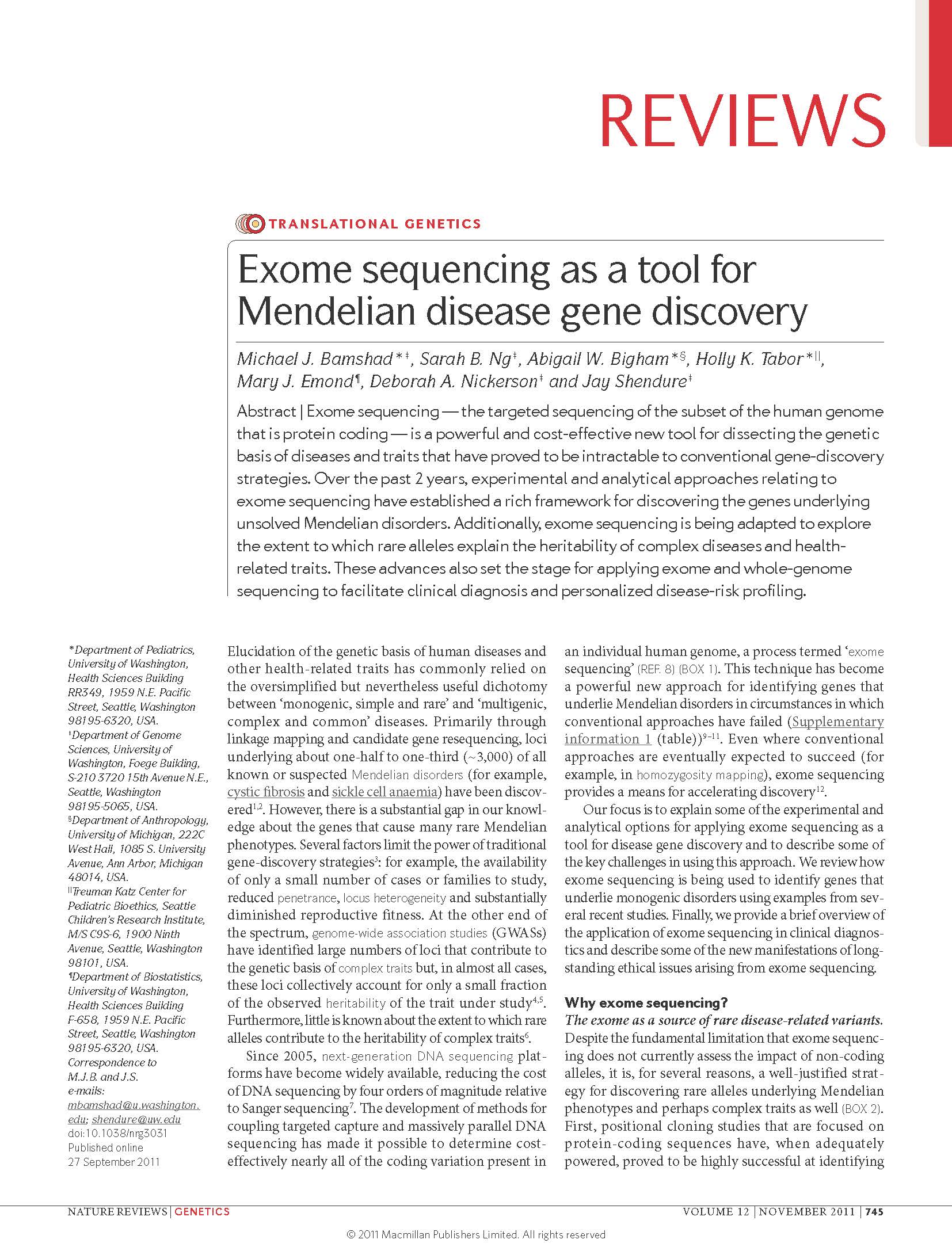
Bamshad et al. Exome sequencing as a tool for Mendelian disease gene discovery.
Nature Reviews Genetics (2011)
 (opens in new tab)
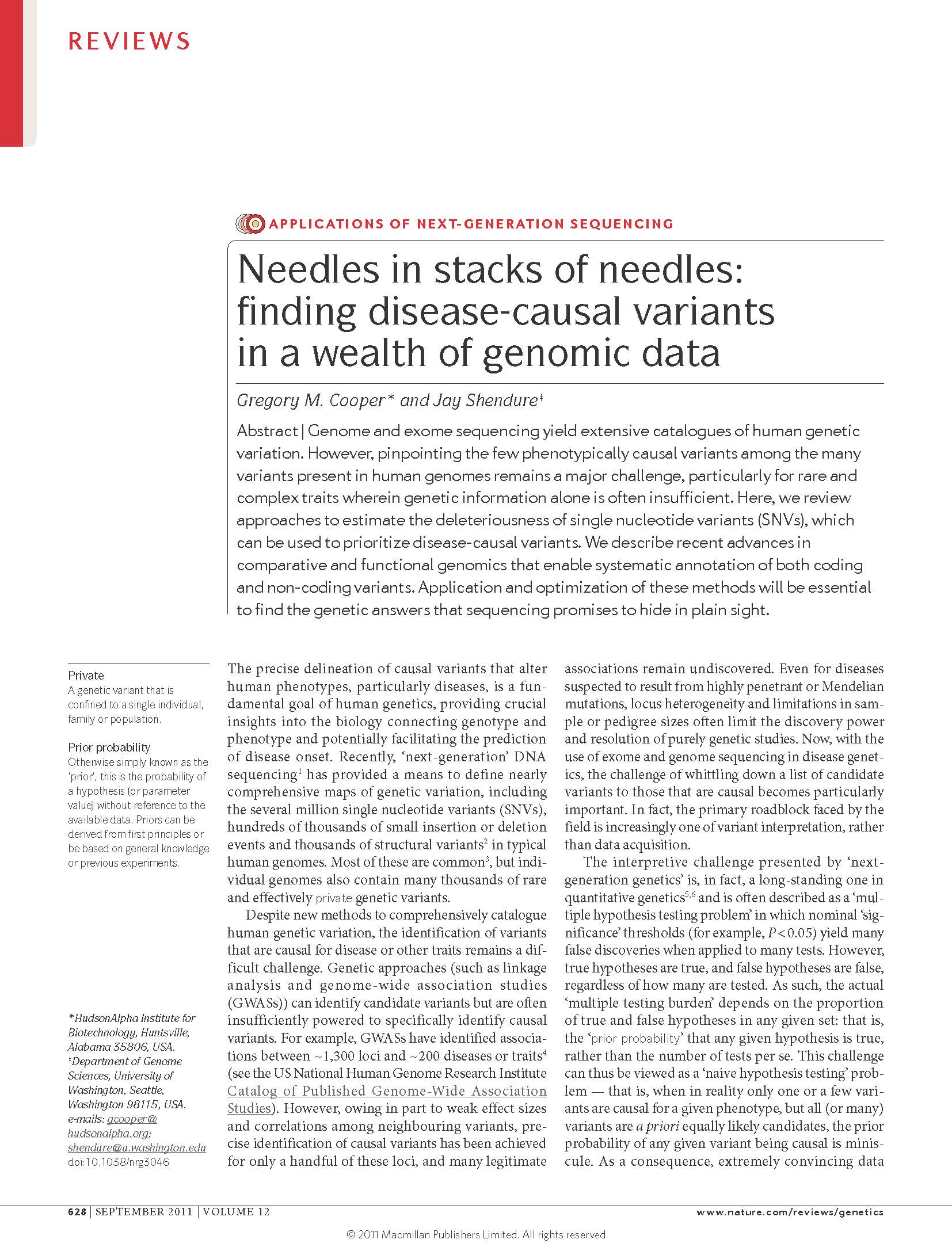
Cooper, Shendure. Needles in stacks of needles: finding disease-causal variants in a wealth of genomic data.
Nature Reviews Genetics (2011)
 (opens in new tab)
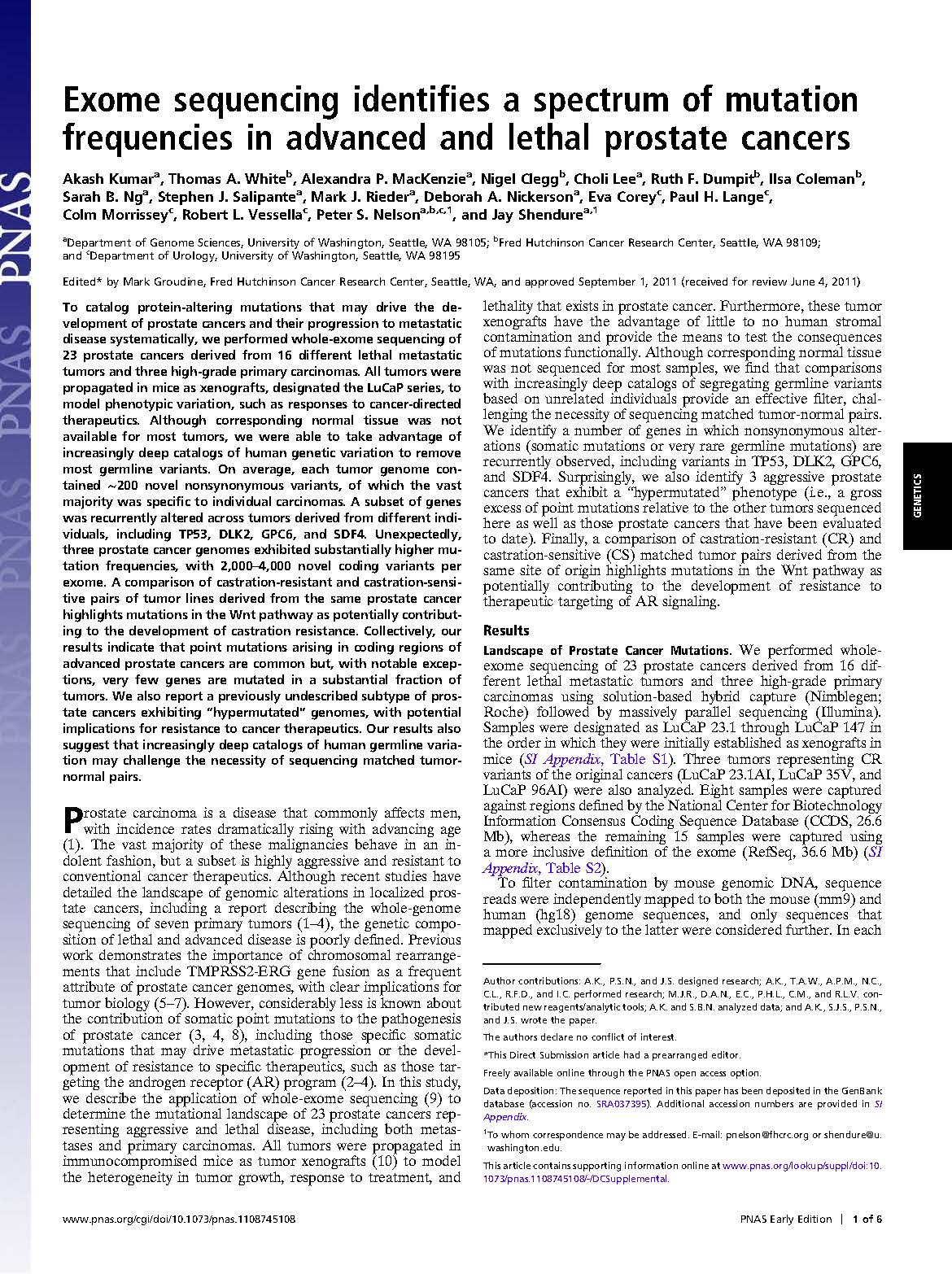
Kumar et al. Exome sequencing identifies a spectrum of mutation frequencies in advanced and lethal prostate cancers.
PNAS (2011)
PMID: 21949389 (opens in new tab) | PDF (opens in new tab)
(with Nelson Lab)
 (opens in new tab)
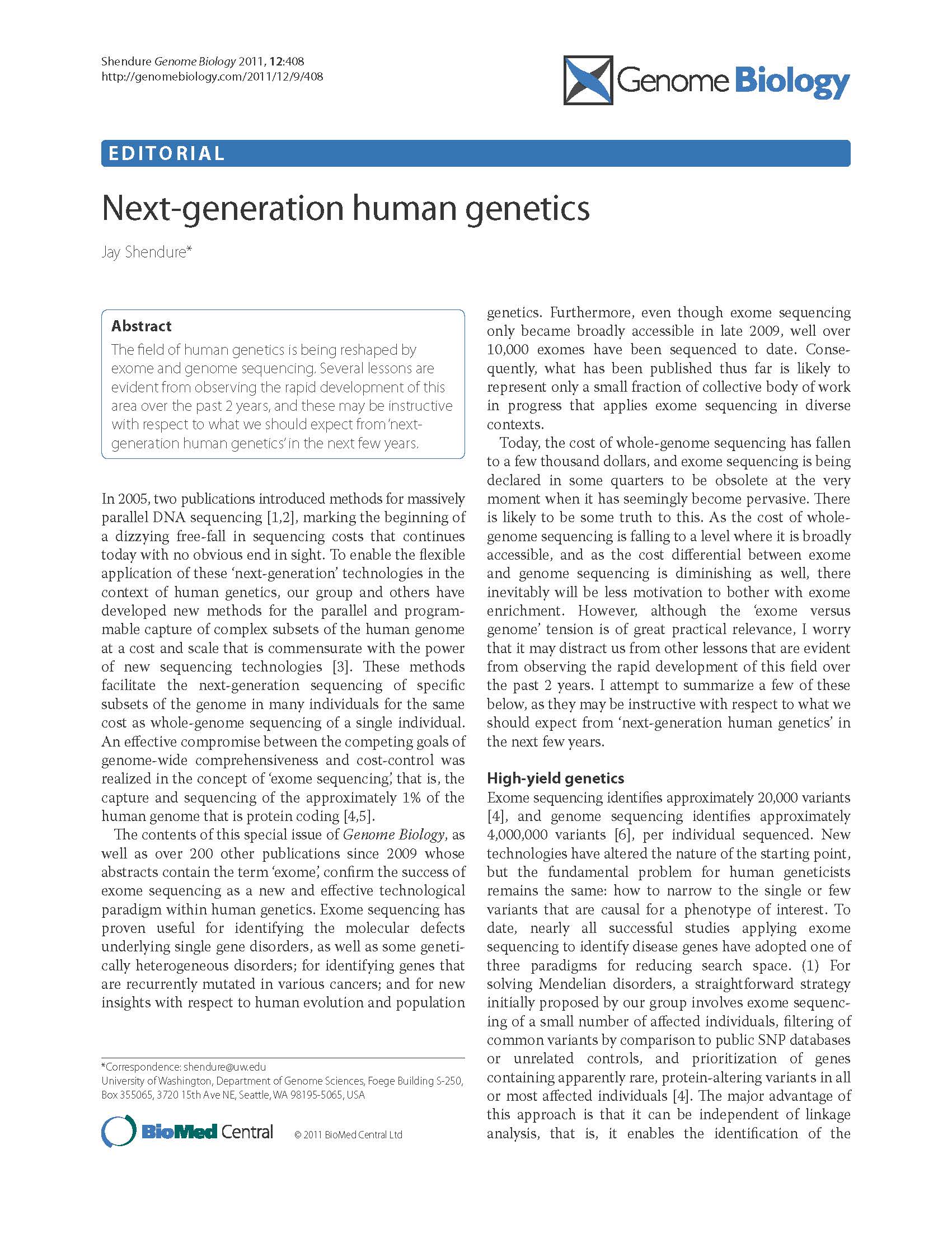
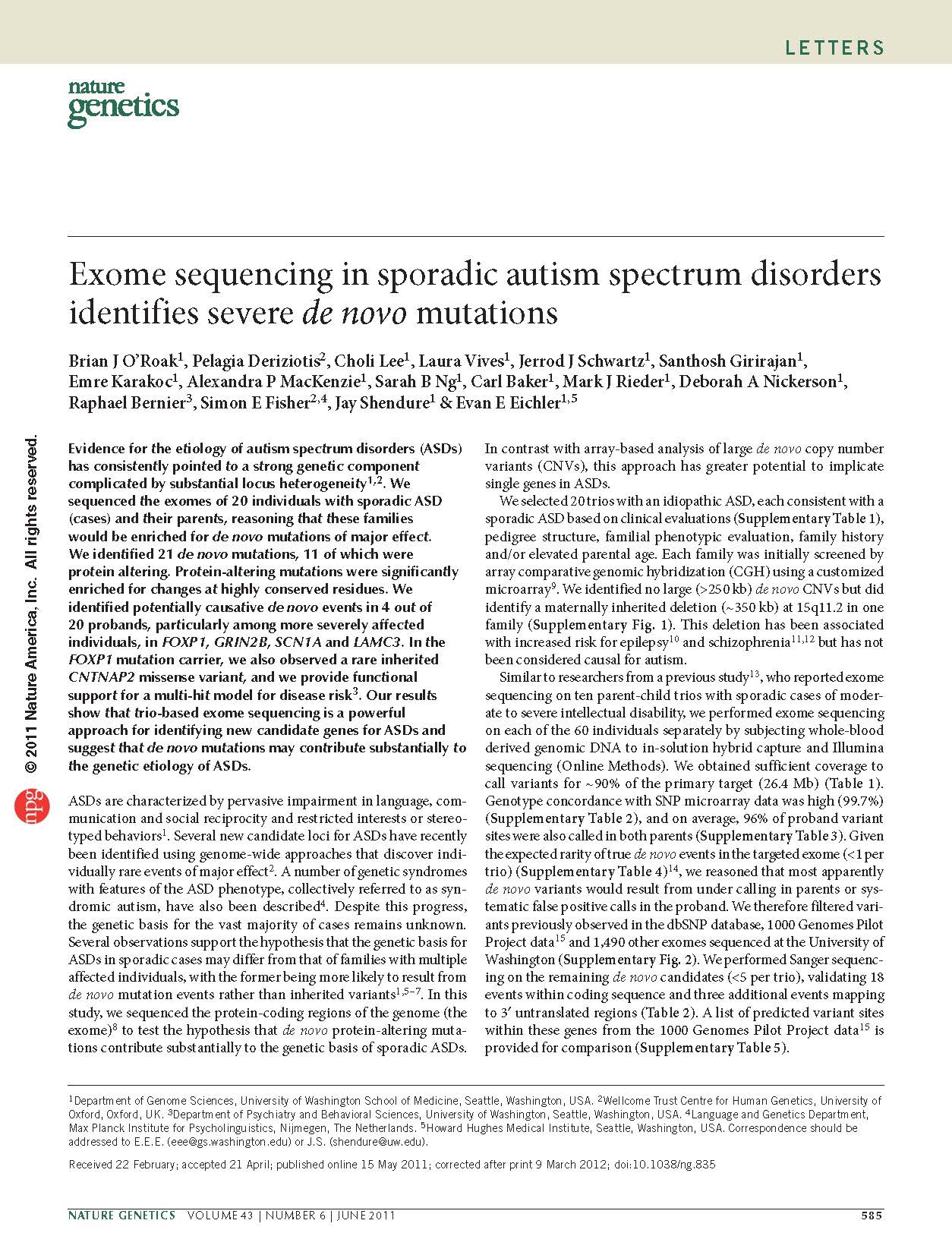
O'Roak et al. Exome sequencing in sporadic autism spectrum disorders identifies severe de novo mutations.
Nature Genetics (2011)
PMID: 21572417 (opens in new tab) | PDF (opens in new tab)
(with Eichler Lab)
2010
 (opens in new tab)
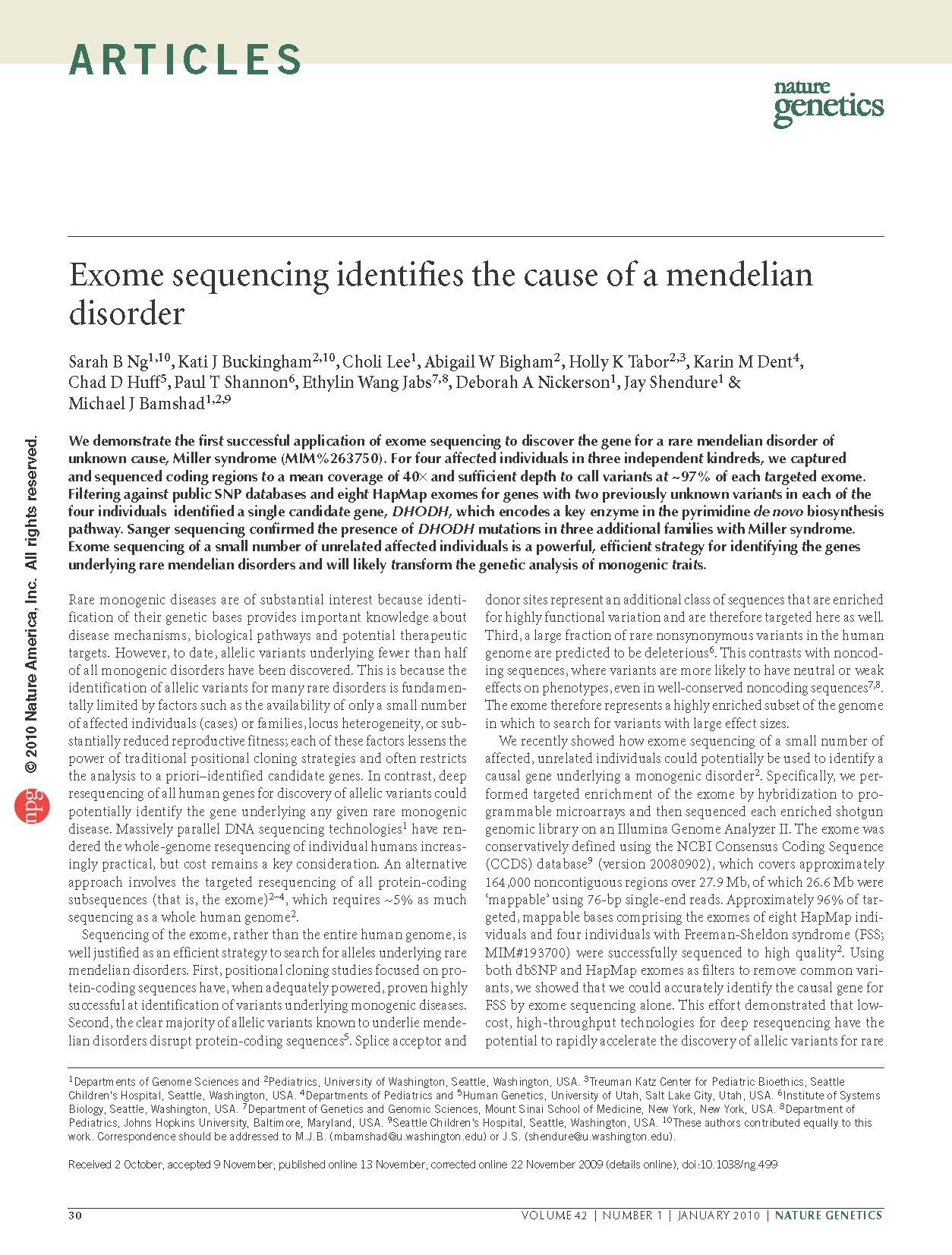
Ng, Bigham et al. Exome sequencing identifies the cause of a mendelian disorder.
Nature Genetics (2010)
PMID: 19915526 (opens in new tab) | PDF (opens in new tab)
(with Bamshad Lab)
 (opens in new tab)
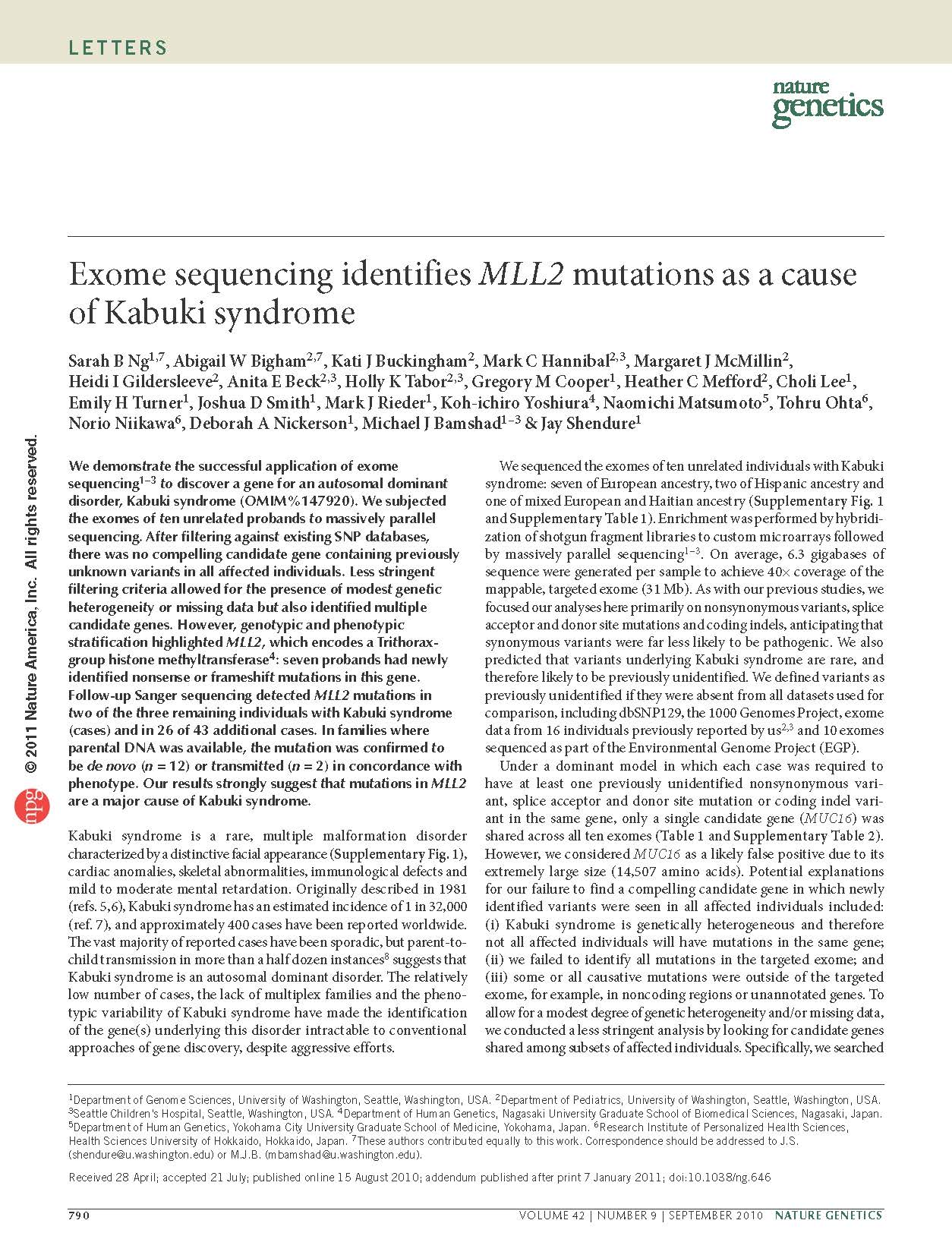
Ng, Bigham et al. Exome sequencing identifies MLL2 mutations as a cause of Kabuki syndrome.
Nature Genetics (2010)
PMID: 20711175 (opens in new tab) | PDF (opens in new tab)
(with Bamshad Lab)
2009
 (opens in new tab)
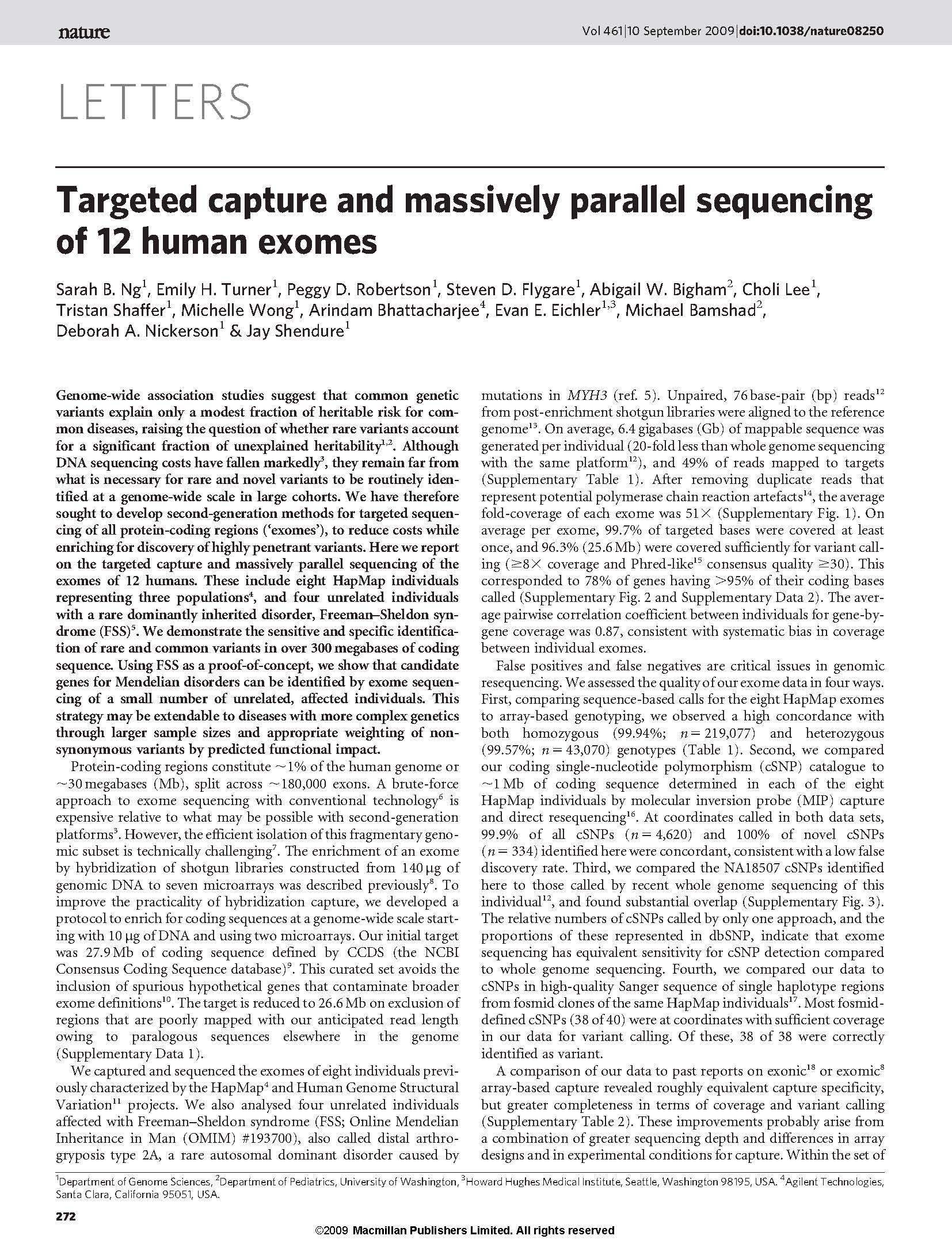
Ng et al. Targeted capture and massively parallel sequencing of 12 human exomes.
Nature (2009)